Written by Arundhati Saraswatula, Oxford Collections Intern
One of the wonderful things about a historic house like Waddesdon Manor is that all its objects, though they come from many different places and time periods, never stand in isolation; they speak to one another. With a new exhibition, Saved for the Nation, and trail, American Connections, opened in the house this Spring, it is the perfect opportunity to highlight some of the stories that the objects on display share, particularly those about Huguenot history and 18th-century culture.
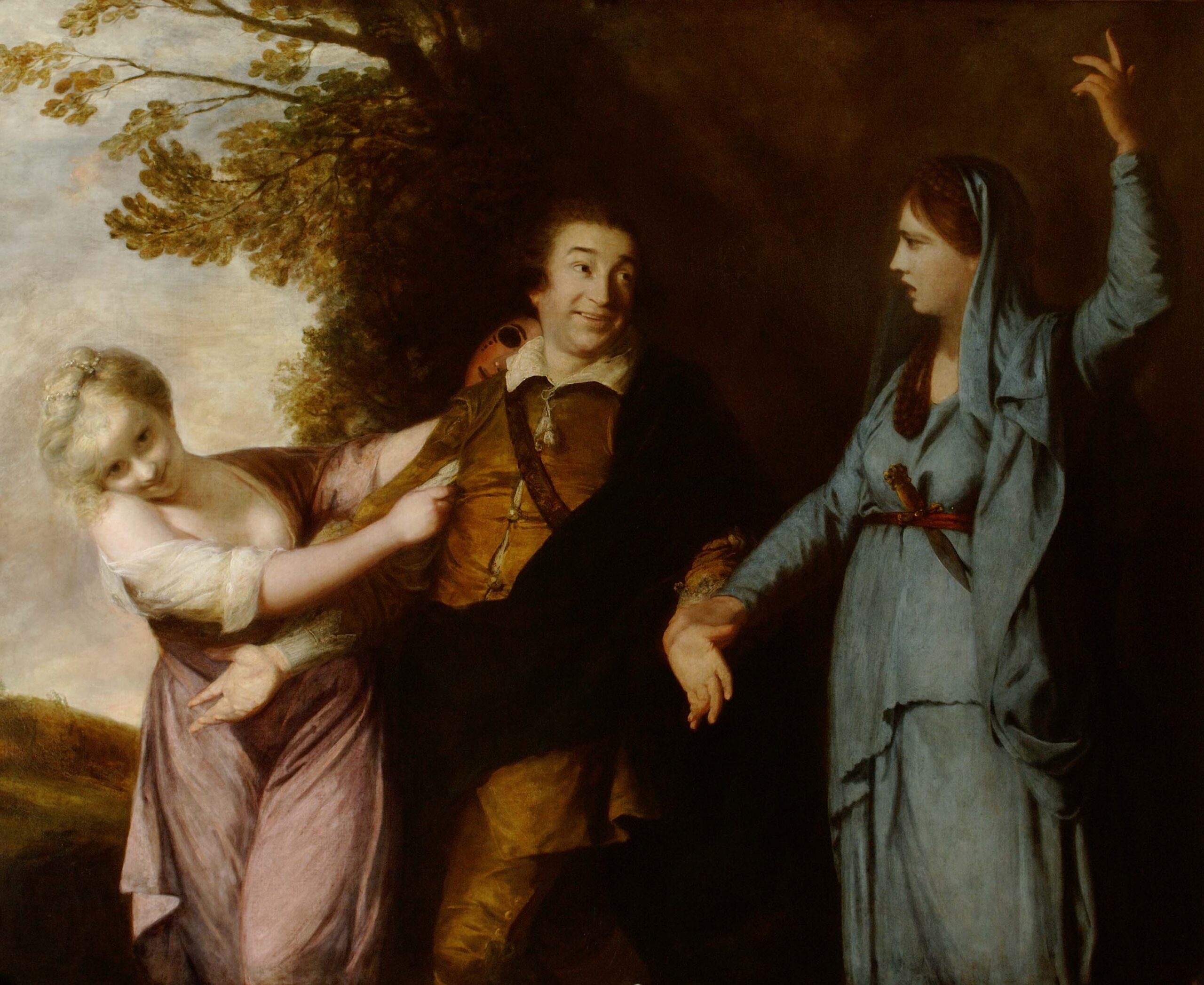
One of the paintings-in-focus of Waddesdon Manor’s recently opened Saved for the Nation exhibition is Joshua Reynolds’ David Garrick Between Tragedy and Comedy. The painting depicts David Garrick (1717-1779), the renowned 18th-century English actor and theatre manager. He rose to fame with his spectacular portrayal of the title character in Shakespeare’s Richard III that premiered on 19 October 1741 at Goodman’s Fields Theatre in London. He was just 24 and insisted on a ‘naturalistic’ mode of acting, where gesture, expression and physicality were key. Six years later, he became the director of the Drury Lane Theatre, reviving plays like Macbeth and turning Shakespeare into the bard as we know him today.
The exhibition puts a spotlight on Garrick’s French Protestant heritage. Protestants in Catholic France were known as Huguenots and were victims of religious violence, especially during the reign of Louis XIV. In 1685, he revoked the Edict of Nantes, a law prohibiting Protestant worship and causing many Huguenots to flee oversees to escape persecution. Many emigrated to Britain, bringing immense knowledge, artistic innovation and creative talent with them. David Garrick was a descendent of this Huguenot ancestry, his paternal grandfather, David de la Garrigue, having been part of the mass migration.
Waddesdon Manor houses an array of objects with Huguenot connections. One example is an object on the American Connections Trail in the Baron’s Room: the magnificent roll-top desk made between 1777 and 1781 for Pierre-Augustin Caron de Beaumarchais (1732-1799). Living across the channel from Garrick, he was a celebrated French playwright, revolutionary, watchmaker, musician, self-appointed diplomat and even a spy! While Garrick’s Huguenot grandfather had fled Bordeaux to Britain in 1685, Beaumarchais’s Huguenot father remained in France and converted to Catholicism. Despite his Catholic upbringing, Beaumarchais defended the rights of Protestants in his writings and plays. He was also a key advocate for American independence from Britain during the American Revolutionary years from 1765-1783. America had been an important refuge for Huguenot emigrants for centuries, and many of the founding fathers of the United States, including George Washington, Thomas Jefferson and Alexander Hamilton, had Huguenot ancestry.
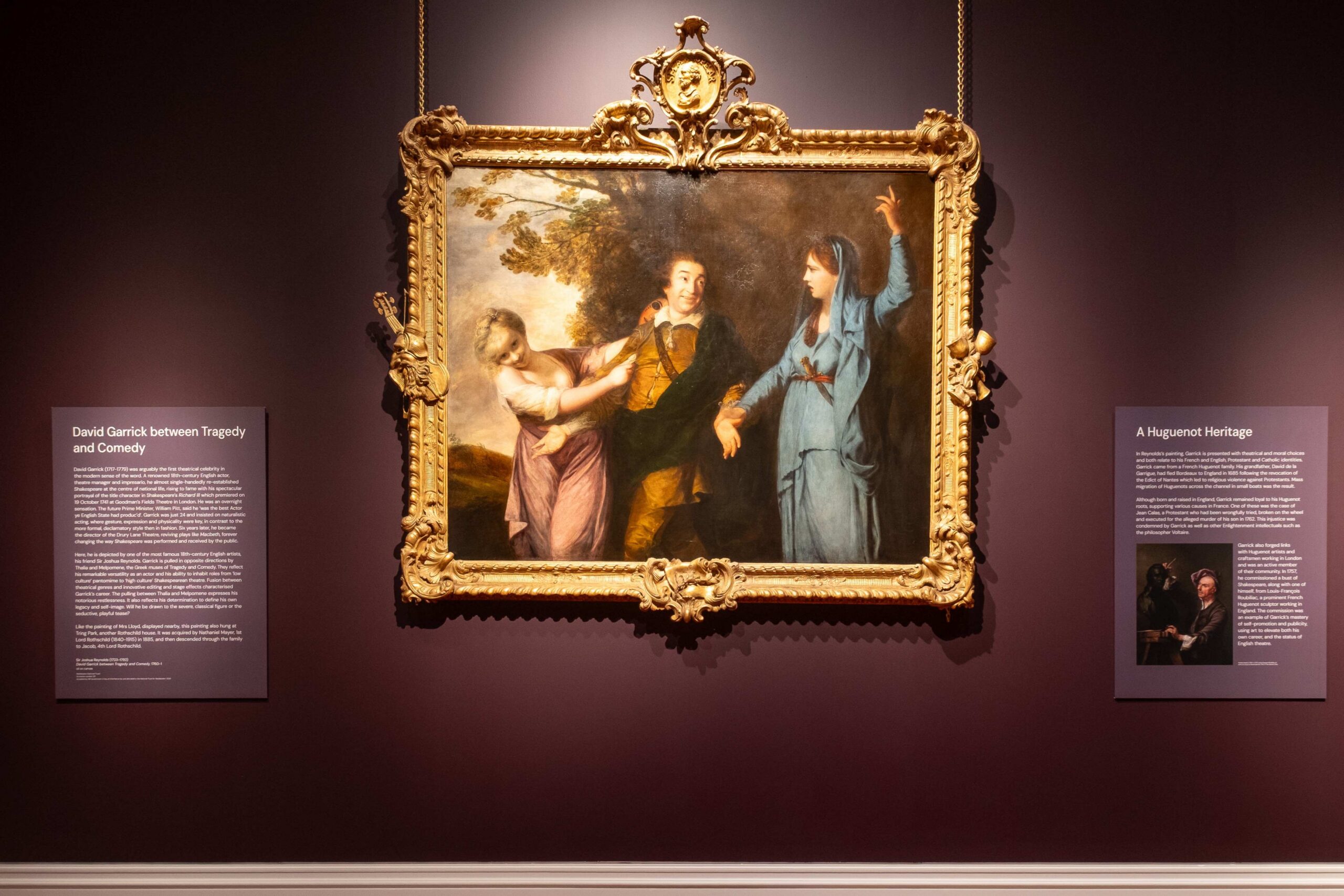
Sir Joshua Reynolds, David Garrick between Tragedy and Comedy
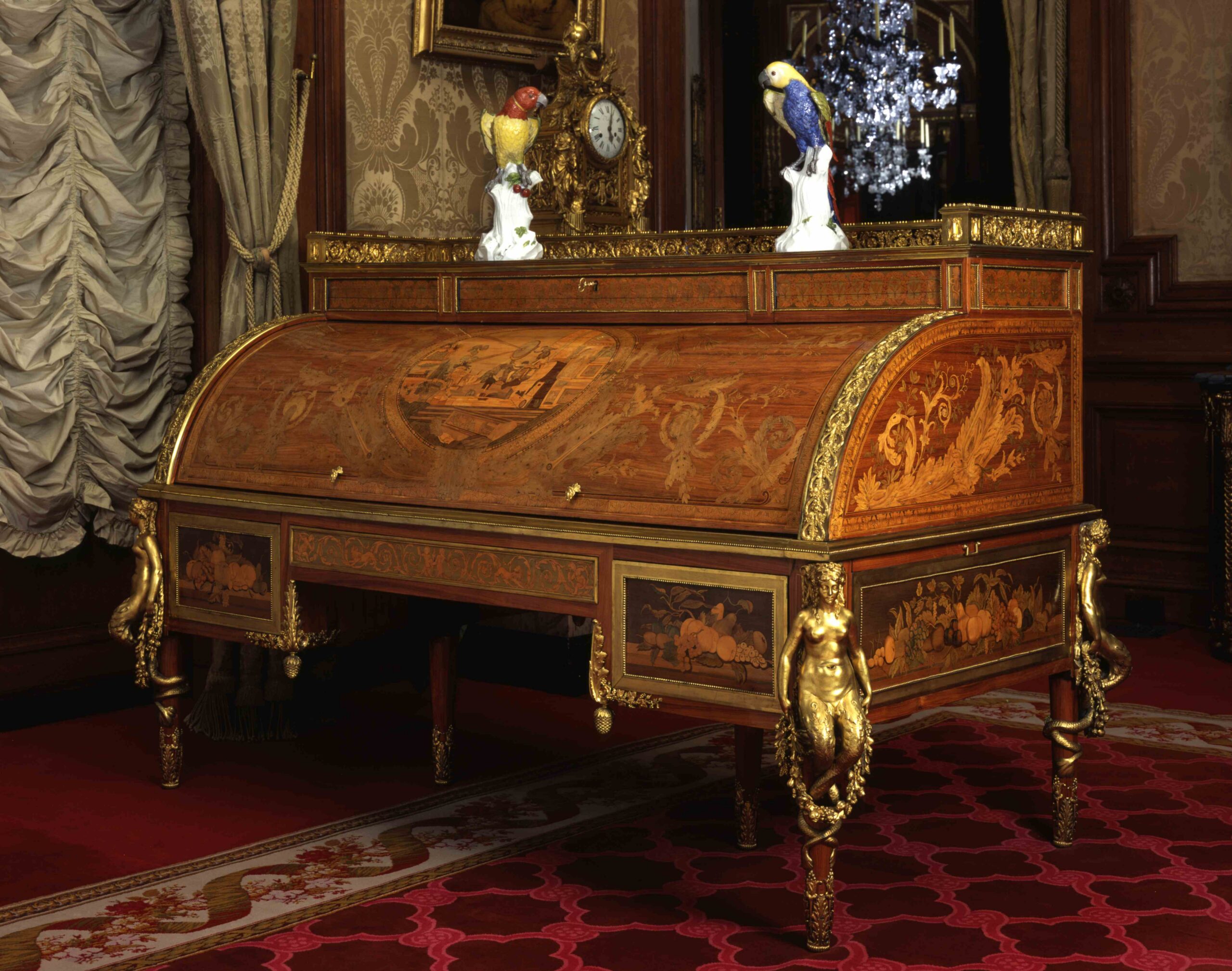
Unknown, Rolltop desk
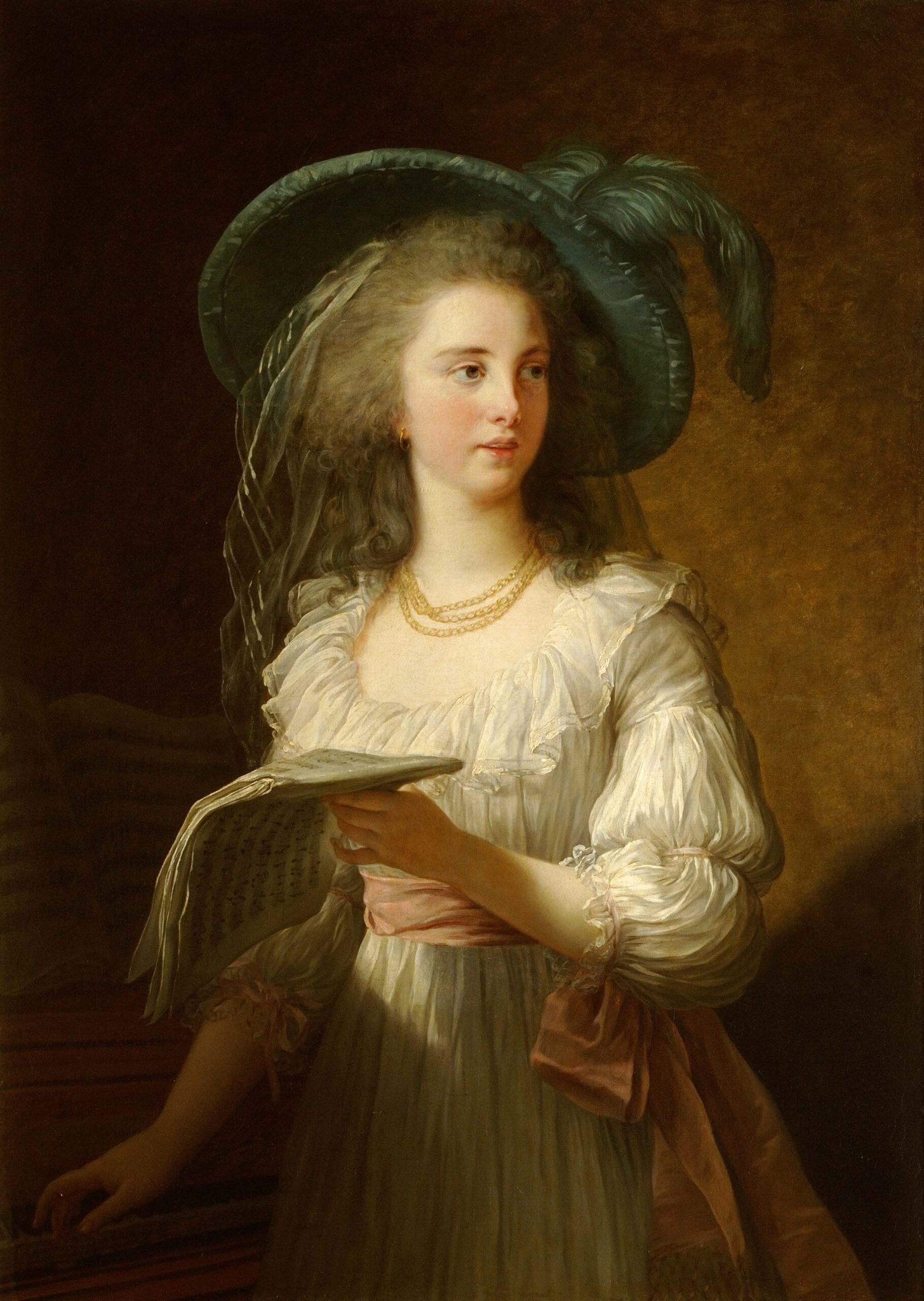
Élisabeth Louise Vigée-LeBrun (1755-1842), Martine-Gabrielle-Yoland de Polastron, the Duchesse de Polignac (1745-1793)
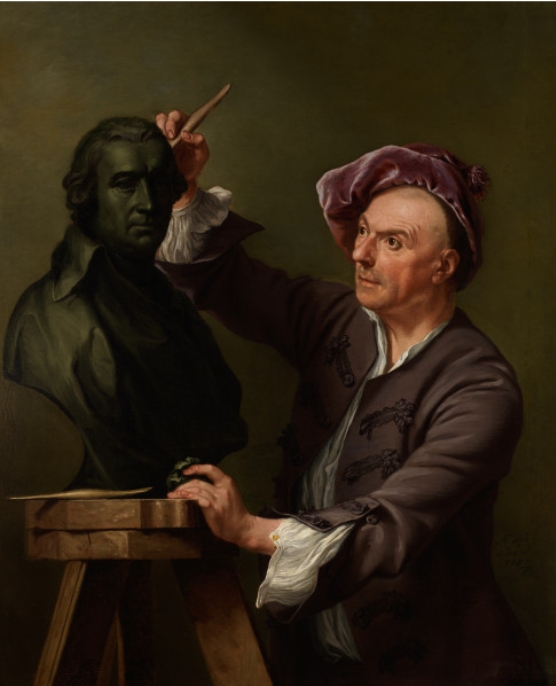
Andrea Soldi (c. 1703-1771), Louis Francois Roubiliac at work on a bust of David Garrick
Both Garrick and Beaumarchais were men of the stage (actors as well as playwrights) who were also greatly involved in the political affairs of the day. The eighteenth century was the age of theatre and politics becoming intertwined, one reflecting the other. Beaumarchais’s most famous plays, The Barber of Seville (1775) and The Marriage of Figaro (1784), were controversial for their Revolutionary undertones and overturning of social roles. They are both comedies involving love triangles and deception, where counts and countesses are made to look fools by servants and domestics. (The artist, Elizabeth Vigée le Brun (1755-1842), whose paintings hang in the entrance to the Saved for the Nation exhibition at Waddesdon Manor, recalled in her memoirs that Beaumarchais broke the windows at the theatre with his cane when someone complained it was too hot, because he was wild with excitement at the controversial Marriage of Figaro, being performed at the Comédie Française!)
The main drivers of the plays are whispering, subterfuge, eavesdropping and being in places that one definitely should not be in. In a case of life imitating art (or perhaps the other way around), Beaumarchais himself was a secret agent. He travelled across Europe arranging shipments of weapons to the American revolutionaries even before France had formally joined the war. Beaumarchais’s life was a string of scandals and quarrels, and King Louis XVI believed him to be insane. Yet he had real knack for political manoeuvring and proved indispensable to the French Crown due to his clandestine gathering of intelligence during the American War.
On the one hand, he supported the overthrow of the old aristocratic order, crafting his public image amongst the theatre-going middle classes. On the other, he undeniably benefited from the French Court, ingratiating himself with royal power.
Garrick similarly straddled various social groups, something that can be seen in the affair of Jean Calas (1698-1792). Calas, who was Protestant, was falsely accused of the murder of his son in 1761; he was tried, tortured and executed the following year. This injustice was publicly condemned by Enlightenment thinkers such as Voltaire who spoke out against the religious intolerance that had led to the execution of an innocent man. The affair inspired various prints, two of which can be seen in the Exhibition Room at Waddesdon Manor depicting Calas and his family in the moments before his execution. Garrick was a firm defender of Calas and interacted closely with the Enlightenment philosophers in Paris who also condemned this injustice. He was welcomed at their literary salons and brushed shoulders with the likes of Denis Diderot and the Baron d’Holbach. Garrick had successfully established his reputation in both France and Britain, associating himself with the intellectual elite, while also aligning himself with causes affecting the non-elite, including the Calas family.
It was due to his mastery of self-publicity as an actor that Garrick’s campaigning for Huguenot justice was so effective. He requested copies and prints of Reynolds’s Between Tragedy and Comedy to be disseminated across Europe, likewise patronising Johan Zoffany, William Hogarth and Francis Hayman to paint stage portraits of him in various roles. In 1765, the playwright George Colman wrote to Garrick from Paris, “There hang out here in every street, pirated prints of Reynold’s Picture of you, which are underwritten, ‘L’Homme entre le Vice et la Vertu’ [Man between Vice and Virtue].” Stage production had for the first time become a matter of art. His self-promotion was facilitated by his connections with French Huguenots in the decorative arts community in London. In 1757, he commissioned Louis-François Roubiliac, a French Huguenot sculptor working in England, to create a bust of Shakespeare, along with one of himself. Drawing himself close to Shakespeare in this way meant that the playwright gained huge popularity, becoming the ‘bard’ as we know him today. This also allowed Garrick to raise his own image and career to the status of legend.
Garrick and Beaumarchais were contemporaries in the European dramatic world, both clever authors of their own self-image, and both being pushed and pulled between France and Britain. Reynolds’s painting on display at Waddesdon Manor, then, is not an isolated depiction of an actor facing theatrical and moral choices. Rather, it should be viewed in light of its wider eighteenth-century context: an era of integration, tension, paradox and restlessness. Perhaps this is one way we can reflect on and connect objects on both the American Connections trail and Saved for the Nation exhibition, and indeed those of Waddesdon Manor’s collection in general.
Images
Figure 1. Sir Joshua Reynolds, David Garrick between Tragedy and Comedy, 1761, oil on canvas, accession no. 135, on display in Waddesdon Manor Exhibition Room, © Waddesdon Manor Image Library, Merriman Photography
Figure 2. Unknown, Rolltop desk, c. 1777-1781, oak, pine, tulipwood, mahogany, ebony, ivory, gilt bronze, accession no. 2474, © Waddesdon Manor (National Trust)
Figure 3. Élisabeth Louise Vigée-LeBrun (1755-1842), Martine-Gabrielle-Yoland de Polastron, the Duchesse de Polignac (1745-1793), 1783, oil on canvas, accession no. 2154, © Waddesdon Manor (National Trust)
Figure 4. Andrea Soldi (c. 1703-1771), Louis Francois Roubiliac at work on a bust of David Garrick, 1757, oil on canvas, inventory no. G0727, © The Garrick Club