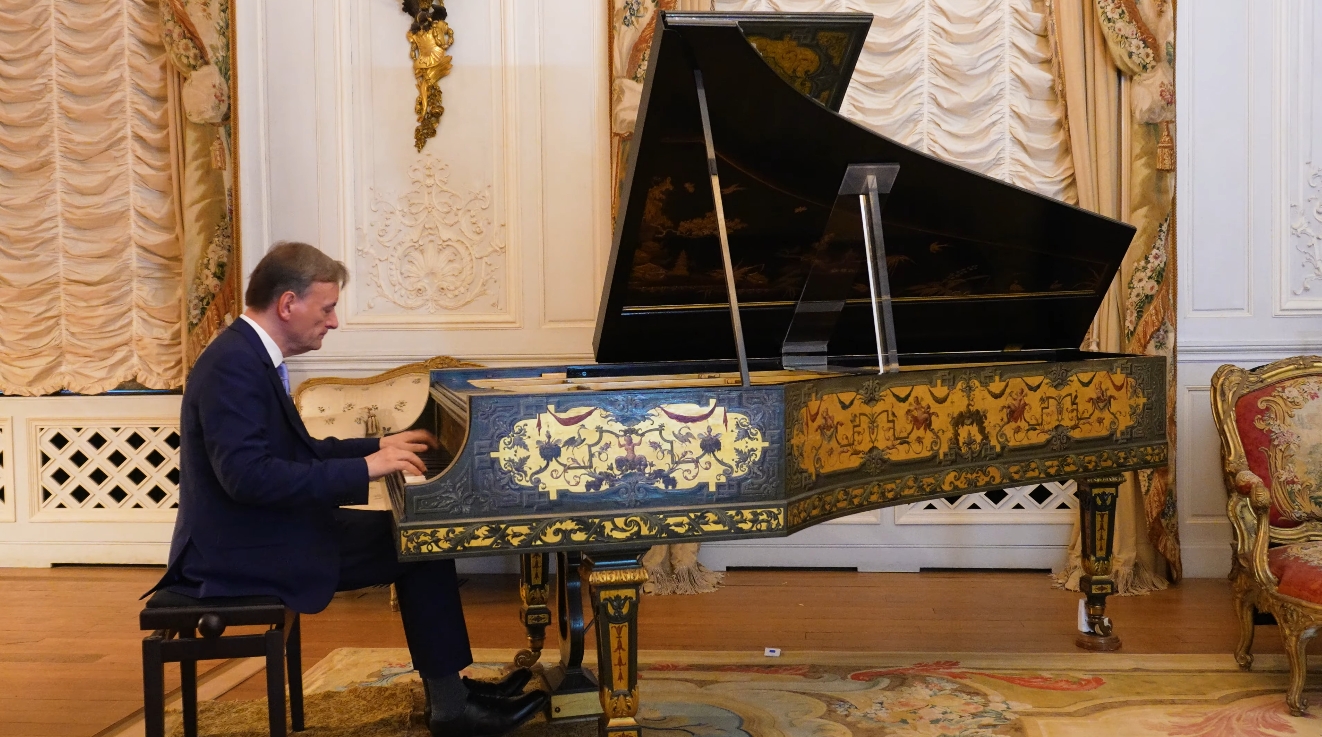
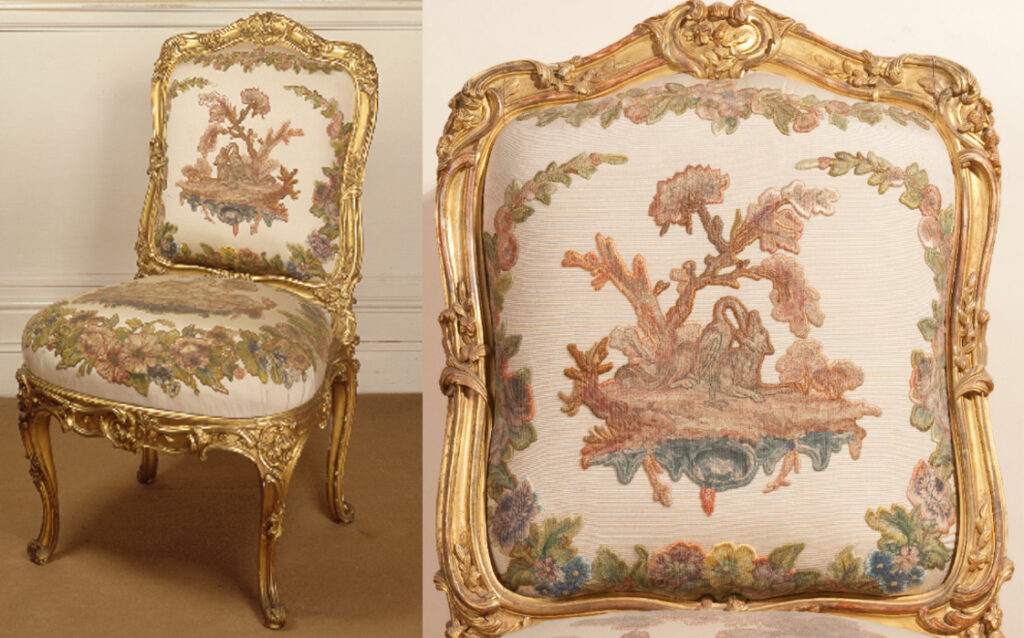
In celebration of Open Furniture Month at Waddesdon, we wanted to highlight some of the important work that goes into protecting the collection for future generations and explore why we keep some of our objects closed or in some cases off display. The beautifully embroidered covers on this chair are temporarily redisplayed for the month.
Nicolas-Quinibert Foliot, chair with embroidered covers, c 1745-1757
(the embroidery c.1775-80), accession number 3253.1
Walking around the Manor, one encounters many blue and grey textiles, not due to a Rothschild personal preference, but because the dyes used have faded from light damage over many years to these muted blues and greys.
Some dyes are more vulnerable to light damage than others – the Savonnerie carpets in the Morning Room and the Horoscope tapestries on the first floor retain traces of lush reds and bright greens that have faded over time, green giving way to blue or purple and red tones to grey.
It’s a common misconception that centuries ago we didn’t have access to impressively bold dyes, however this isn’t strictly true. Natural dyes such as madder (red), saffron (yellow gold) and wode (blue) produced incredibly vibrant hues, and were highly valued.
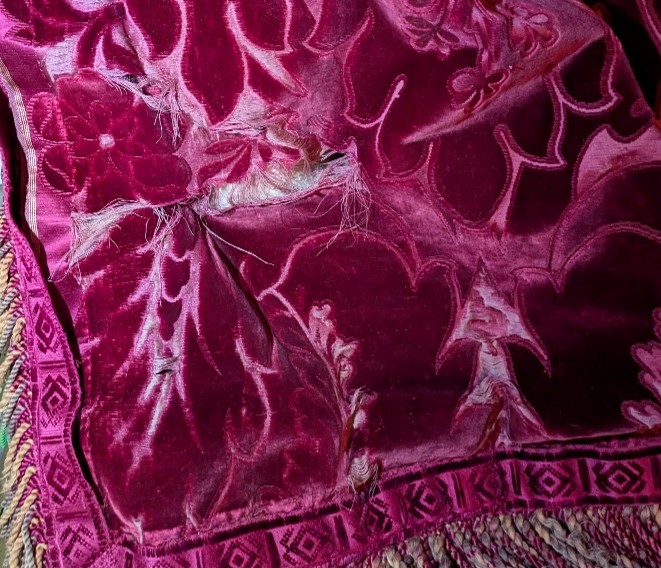
Textile dyers were able to make them even more saturated using metal salts such as aluminium chloride – known as, mordant salts which were added during the process of dying fibres; unfortunately, over time this addition has caused some textiles, particularly silk, to become more fragile.
Savonnerie manufactured carpet, French, c 1745-1750, accession number: 2317
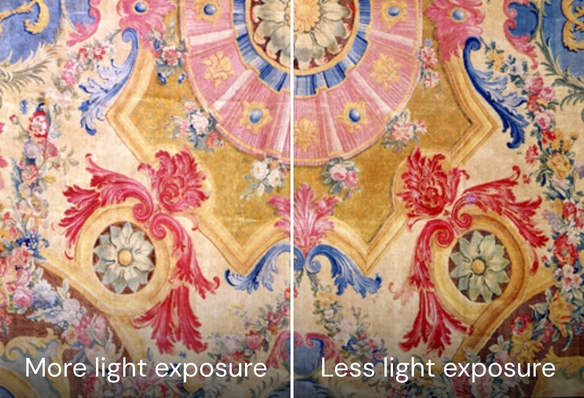
The fading of dye or the yellowing and browning of concentrated spots in textiles due to light exposure, also known as photochemical degradation; a process where the absorption of UV rays damages and discolours fibres,is incredibly common and can be seen in objects all around the Manor and maybe in your own home!
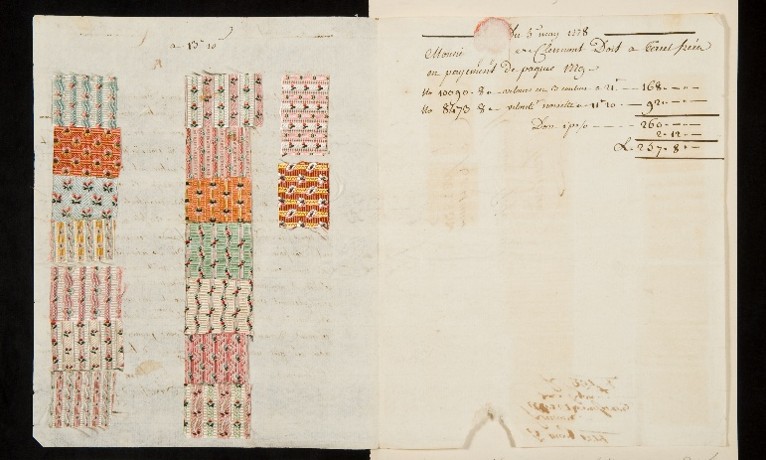
Sample fabrics from a collection of papers, c 1880s, accession number: 82.2000
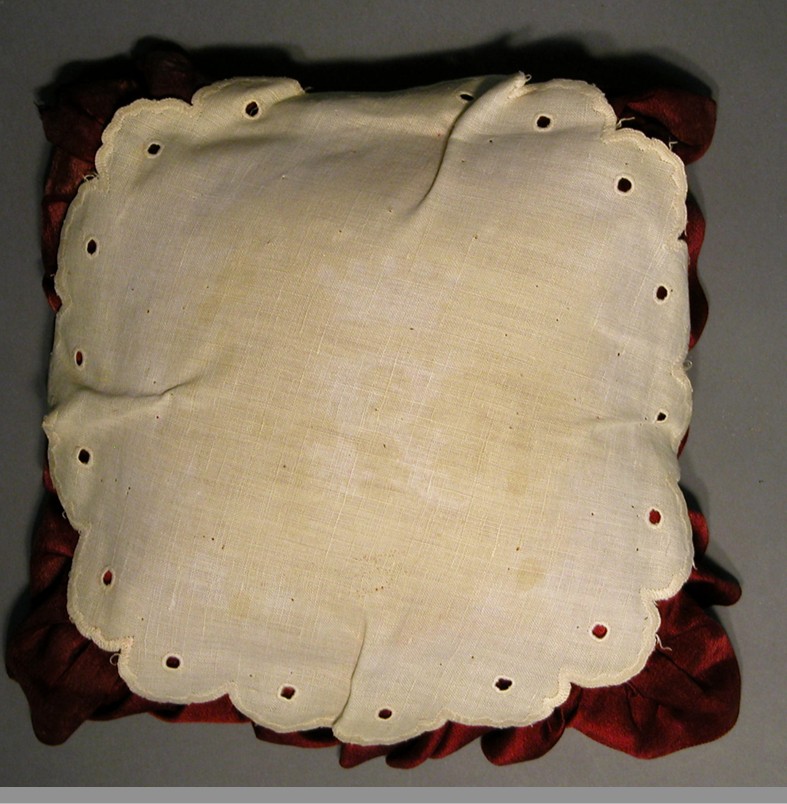
The fading of dye or the yellowing and browning of concentrated spots in textiles due to light exposure, also known as photochemical degradation; a process where the absorption of UV rays damage and discolour fibres,is incredibly common and can be seen in objects all around the Manor and maybe in your own home!
Pin cushion, showing discolouration from light damage, 1860-1870s, accession number: 7.2000
This is one of the main reasons we ask visitors not to touch or sit on upholstered furniture, as too much abrasion or force could irreparably damage any of our many important objects.
Tassinari & Chatel silk velvet curtain, example of shattered silk, c 1880, accession number: 2213
Caring for the collection
An important part of preventive conservation is monitoring agents of deterioration, and light is monitored in several ways by the conservation team.
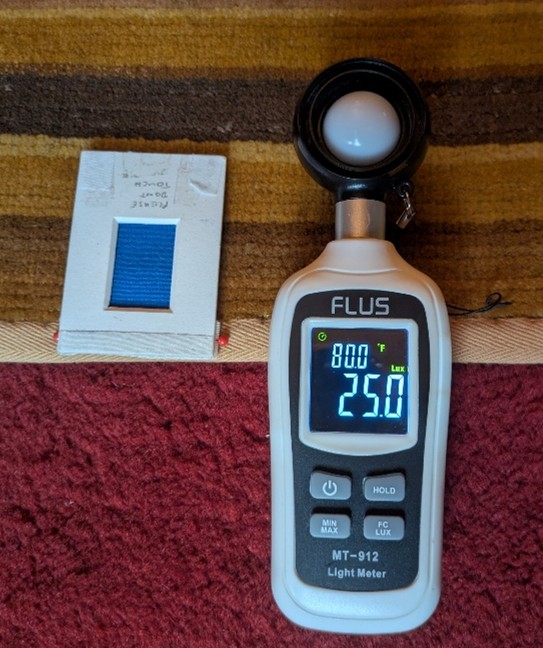
Every morning, our team measures the light levels on our most vulnerable objects using a light reader. Textiles should not be exposed to levels greater than 50 lux. We can reduce the light when the Manor is open by lowering the window festoons and using mesh blinds, so that visitors can still enjoy our collection while keeping it safe.
Another way we measure light exposure is by using a nifty little device called a blue wool scale dosimeter, is a small square of dyed blue wool, used to assess how much light a textile has received over the course of a year.
The blue wool fades in light conditions to a known degree, as blue is more resistant to fading through light exposure than other pigments, making it a suitable control for measuring exposure. Comparing the exposed dosimeter to a standardised scale at the end of the year shows us the level of light to which the object has been exposed.
Over the winter closure we can further reduce the number of light hours our collection gets though the use of furniture covers which also helps with keeping these delicate textiles dust free after a deep clean. The next time you are in the Manor, take a moment to look closely at the textiles on display and see if you can spot some of the original pigments in the areas protected from the light!