History
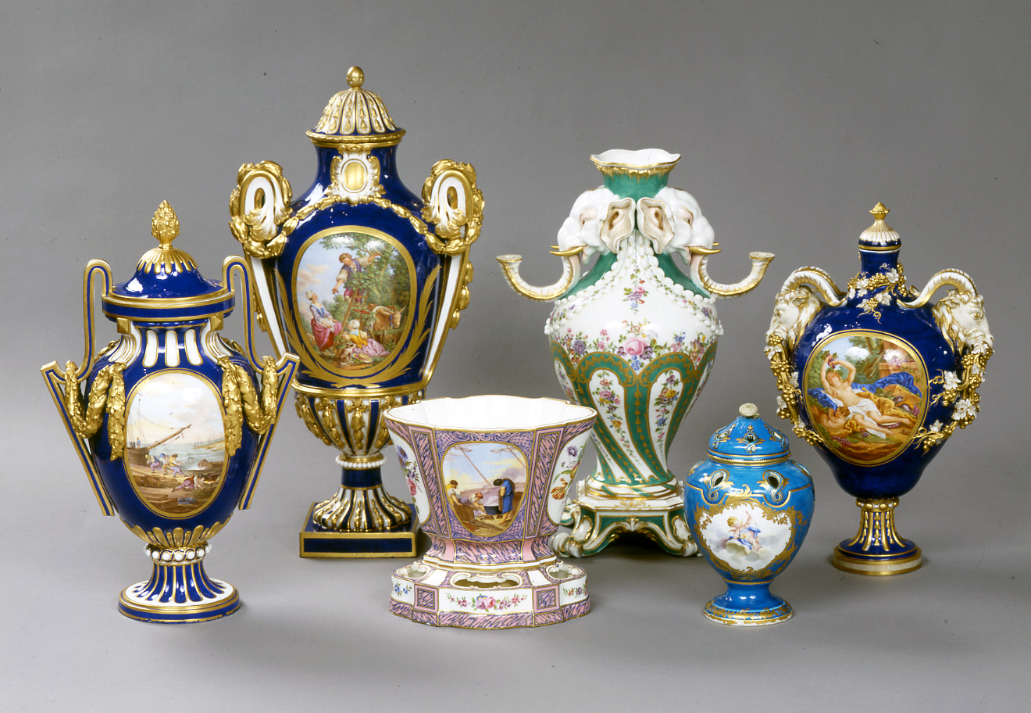
Sèvres porcelain has become a key symbol of 18th-century French decorative arts. Established in 1740 in Vincennes, Sèvres became synonymous with its ties to the French court through its receival of royal patronage in 1748, with key patrons including King Louis XV and Marie Antionette. Serving predominantly as decorative pieces rather than functional objects, commissions ranged from diplomatic gifts to prized collectable items. Key products included richly decorated and gilded vases, extensive dinner services and service wares.
The onset of the French Revolution saw thousands of private collections redistributed across Europe. Sèvres quickly became highly coveted within European art markets. At Waddesdon, objects acquired by Ferdinand and Alice de Rothschild and their cousin Edmond provide key examples of historic artistry and are on display throughout the Manor.
How is it made?
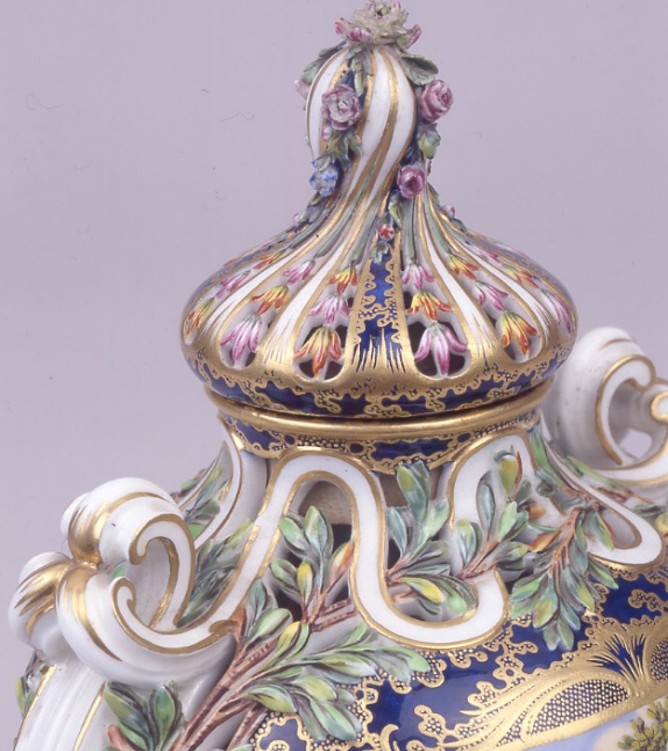
The process of making a Sèvres porcelain vase requires several stages. After initial designs and practice plaster models are made, plaster moulds are created for the main body, handles and decorative features. Porcelain paste is then applied to the inside of each mould, left to dry, and attached together like jigsaw pieces using a watered-down paste solution called slip. The piece is then fired and glazed, ready for the decorative stage.
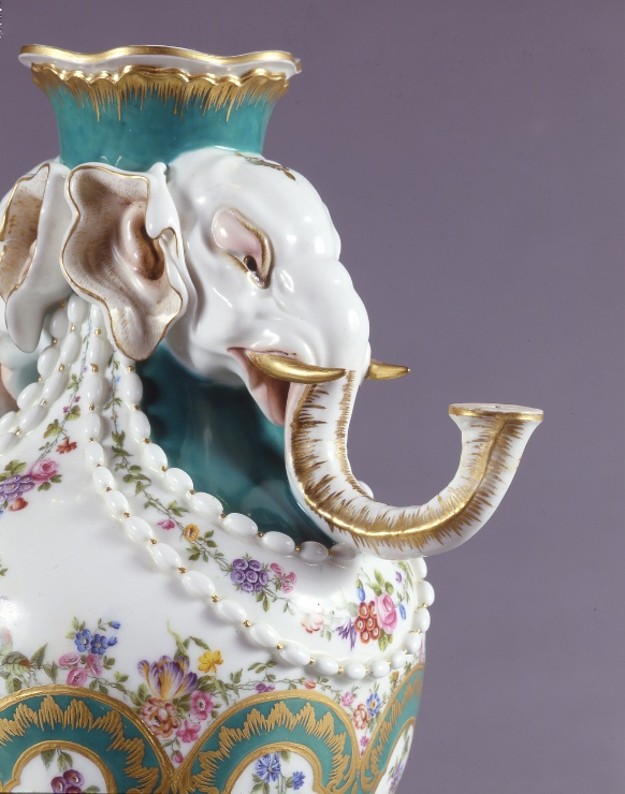
The base colour, also called the ground colour, is applied first. A variety of shades were used, including pinks, greens, yellows and blues, as well as black and white. Illustrations, called cartouches, are then painted onto the surface. These can include birds and flowers, as well as copies of famous paintings. Finally, several layers of gilding are applied and fired. Each stage is completed by a different contributor, illustrating each piece as an example of collaborative artistry.
Maker’s Marks
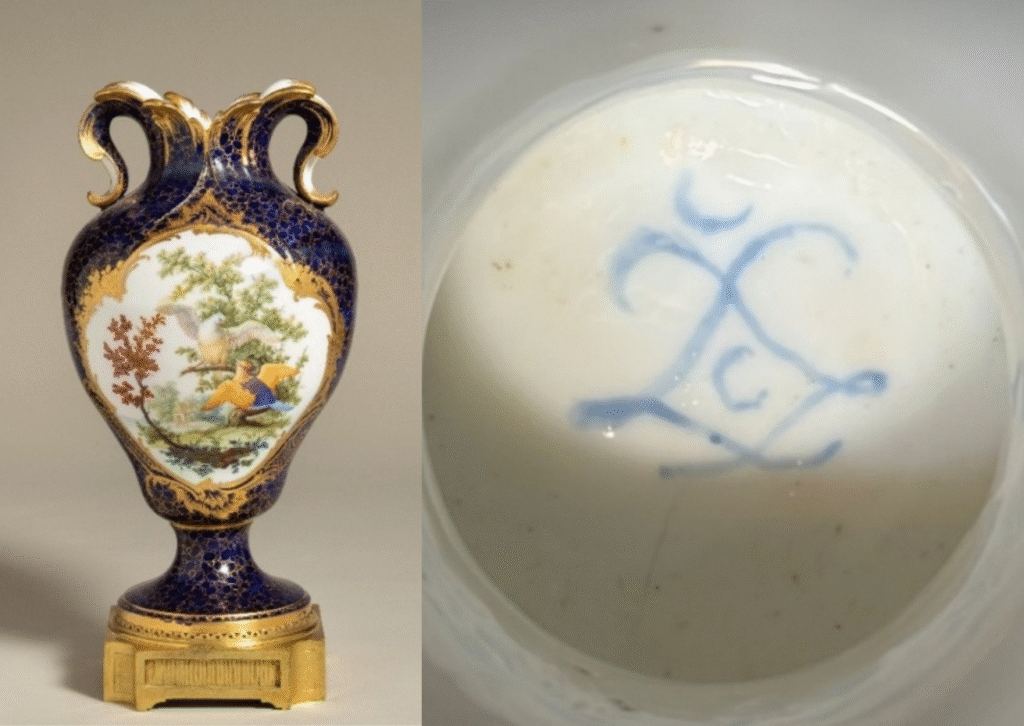
Maker’s marks form a key role in verifying an object’s authenticity. 18th-century Sèvres often bears the mark of two interlaced L’s, for Louis XV, often found on an object’s base. This is illustrated below through one of our vases currently on display in the West Gallery. Enclosed within the interlaced motif is the letter ‘C’. From 1754, letters were used as a method of dating each object. When completed, letters were then doubled until 1793 (QQ), when the method of alphabetisation was dropped. As a result, this vase can be dated to 1756.
This piece is also unique in that it includes a painter’s mark, symbolised through the crescent moon above the manufacturer’s mark. This relates to the artist Louis-Denis Armand who specialised in painting birds, both real and fictional. As well as an important tool in identifying an artist’s work, the mark also acted as an artistic signature, illustrating which piece they had contributed to and how much they would therefore be paid.
Object in focus: mantlepiece vases
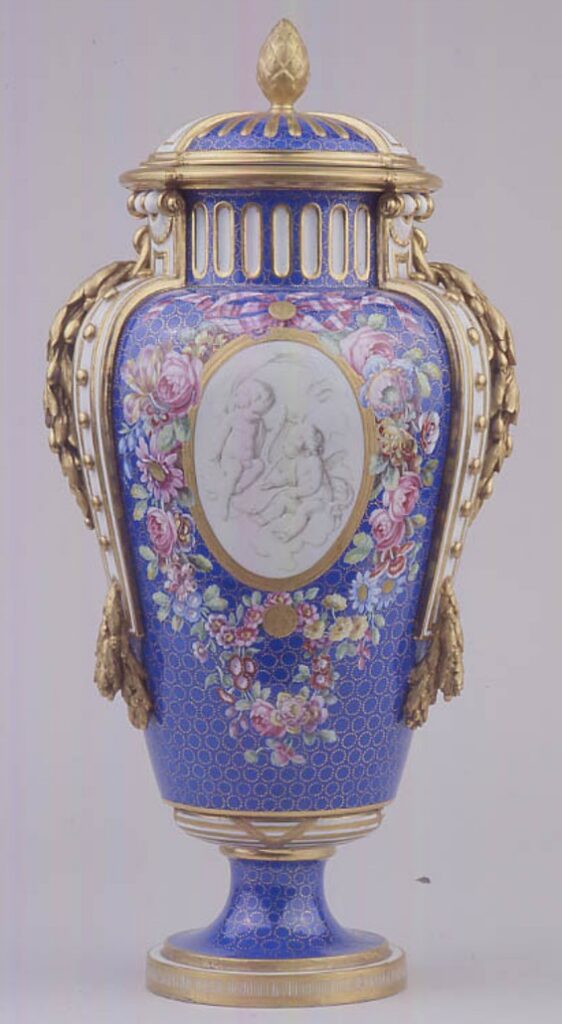
A key example of Sèvres porcelain within our collection are the five vases displayed on the mantlepiece in the Baron’s Room. Although shown as a full set, called a garniture, these vases form part of a 15-piece set originally bought by Louis XV in 1769. Set in the ground colour bleu fallot, these pieces are particularly interesting in showing different design techniques used in Sèvres porcelain. The trophies and figures featured on each vase are applied using a technique called grisaille, where illustrations are painted to imitate marble.