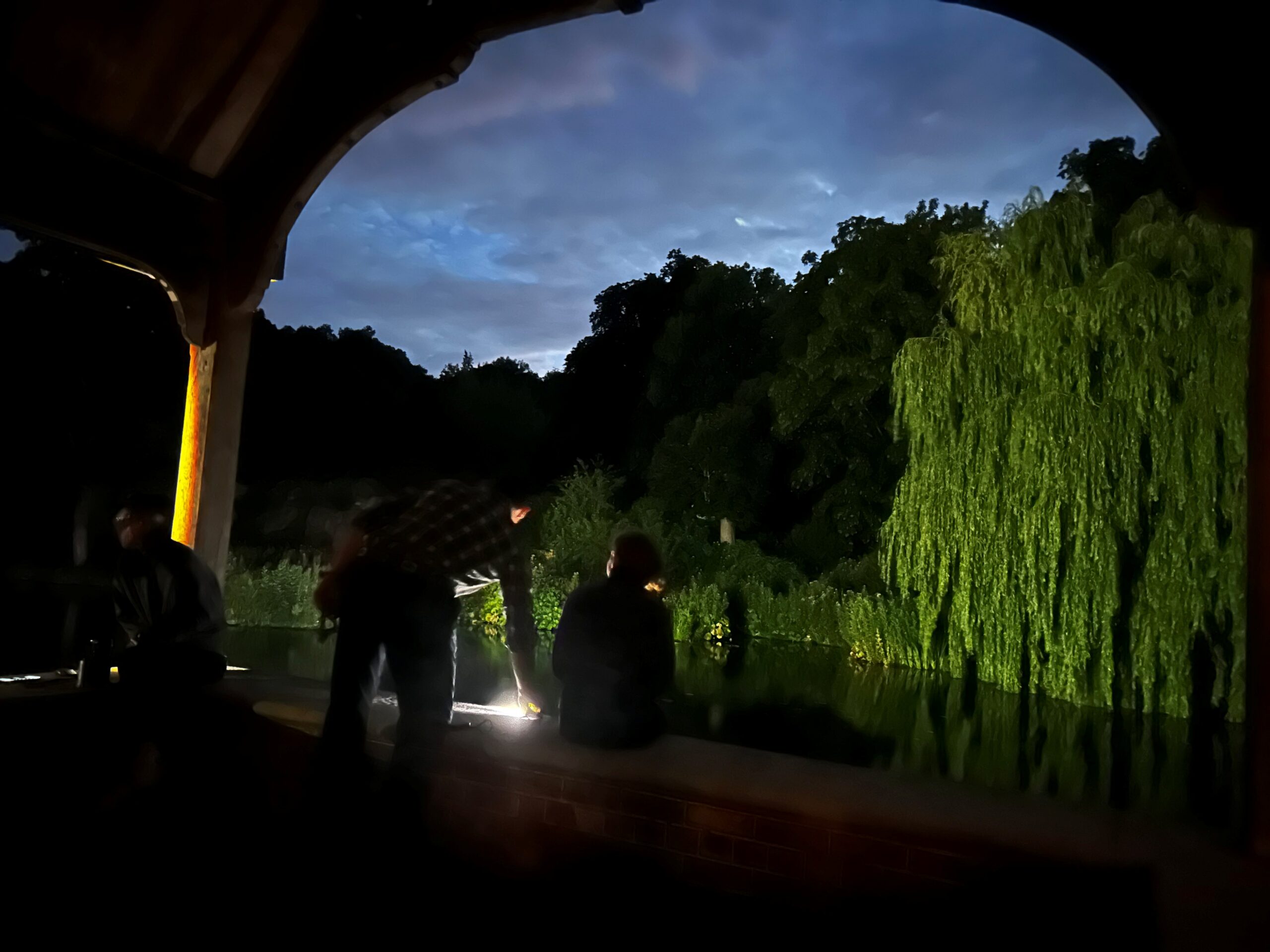

As the sun went down and the grounds began to quieten, some of the wildlife are just waking up. Joining one of Waddesdon Manor’s guided bat walks offers a fascinating glimpse into the lives of some of Britain’s most remarkable and often misunderstood nocturnal mammals, bats.
Led by the Manor’s conservation team, the walk took us through the woodland, along Miss Alice’s Drive and down towards the Dairy, where the bats can often be seen skimming across the lake in search of insects. Equipped with bat detectors and night vision equipment, we were able to experience the estate after dark in a completely new way.
Although bats are often difficult to see, they are far from silent. They navigate and hunt using echolocation, producing high frequency calls that bounce off surrounding objects, creating a detailed picture of their surroundings.Our hand-held bat detectors recorded the kHz frequency of the calls and as each species has its own distinctive frequency, we could see what bats were calling. For example, the Common Pipistrelle typically calls at around 45 kHz, while the Barbastelle Bat can be recognised by its lower frequency call of around 32 kHz.
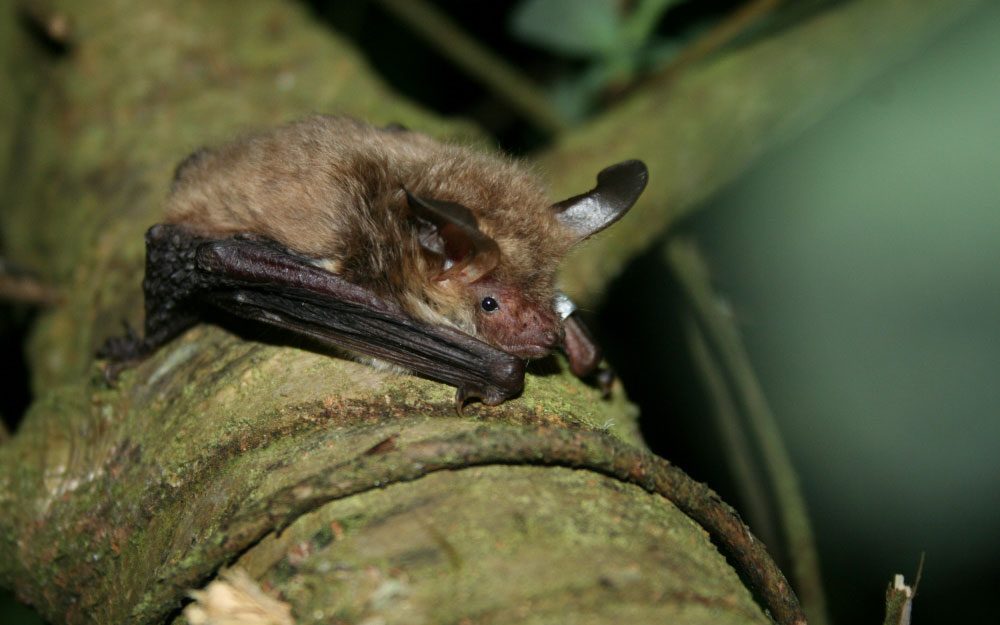
Waddesdon Manor has long been an important haven for bats. With its mosaic habitat – from ancient woodland to the Manor’s buildings and the caves near the Dairy – it has become home to 11 of the UK’s 18 bat species. These include Brown Long-eared, Common Pipistrelle, Daubenton’s Bat, Grey Long-Eared Bat, Leisler’s Bat, Nathusius’s Pipistrelle, Natterer’s Bat, Noctule, Serotine, Soprano Pipistrelle and Whiskered Bat.
Protecting these habitats is a key part of Waddesdon Manor’s conservation team’s work. Alongside safeguarding roosting sites and installing bat boxes, keeping pesticides to a minimum, the team carries out monthly bat transects. These help to monitor changes in bat activity throughout the year.
Using bat detectors, every survey records which species are present, with the results shared with the Buckinghamshire and Milton Keynes Environmental Records Centre (BMERC). These records contribute to a wider understanding of local bat populations and will help future conservation efforts across the county.
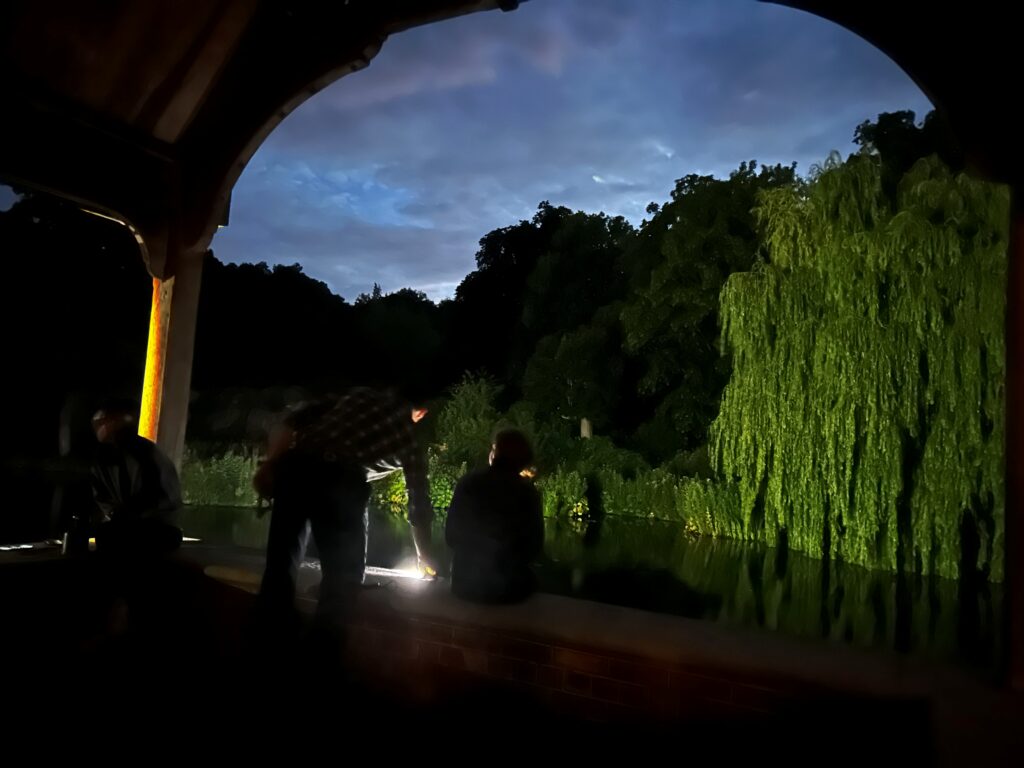
As it got darker, the bat detectors began to pick up Pipistrelles calling and we could hear Tawny Owlets in the trees. Also there were flitting glimpses of the bats as they flew through the woodland.
These popular evening walks offer visitors a rare opportunity to learn about bat ecology, discover the Manor’s ongoing conservation work and experience the estate from a completely different perspective.
Several more guided Bat Walks are planned throughout the summer. If you’d like to discover the hidden world of bats for yourself, keep an eye on our What’s On page for upcoming dates and booking information. Whether you’re a keen wildlife enthusiast or simply curious about what happens after dark, it’s an evening to remember.