
Research & Publications
Waddesdon continues to benefit from research partnerships with leading universities, including the University of Warwick and Queen Mary University of London.
Supported by major grants from the Leverhulme Trust, British Academy, and Arts and Humanities Research Council, these projects—led by post-doctoral fellows and doctoral students—focus on cataloguing and studying areas of the collection rarely seen by the public. Today, the results are published online, making Waddesdon’s collections more accessible than ever and providing valuable resources for scholars worldwide.
Conservation Projects
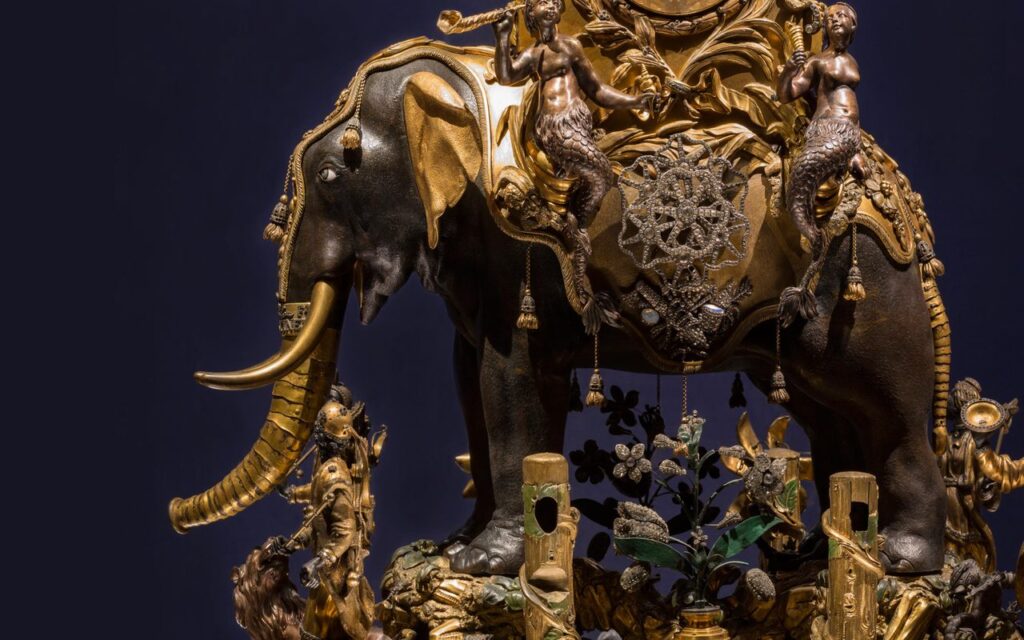
Elephant
In 2023 one of Waddesdon’s greatest treasures, a remarkable elephant automaton by Hubert Martinet, has undergone a programme of conservation work.
This is the first time in living memory that the automaton has undergone conservation level cleaning, in addition to its once-a-decade mechanical overhaul, and it gave us the opportunity to investigate the materials and their history, the mechanism and even his sound barrel.
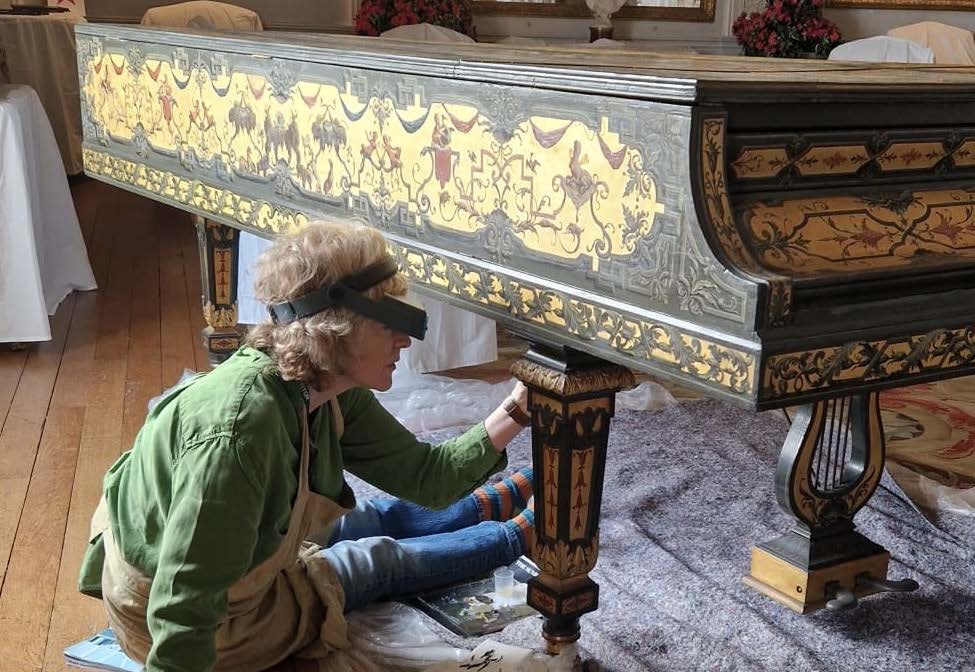
Piano
This grand piano has recently been conserved and returned to playing condition.
Corrosion to the strings and keyboard meant that the mechanism had to be dismantled. The strings were replaced, the hammers refaced and the instrument re-balanced.
Areas of the case were cleaned while the lid, which had bowed and developed shrinkage cracks, was stabilised, filled and retouched using reversible techniques.
This project was partly funded through a generous donation by Cambridge Associates in memory of the late Lord Rothschild.
Conservation carried out by: Michael Parfett, Paul Tear and Jane Wallis.
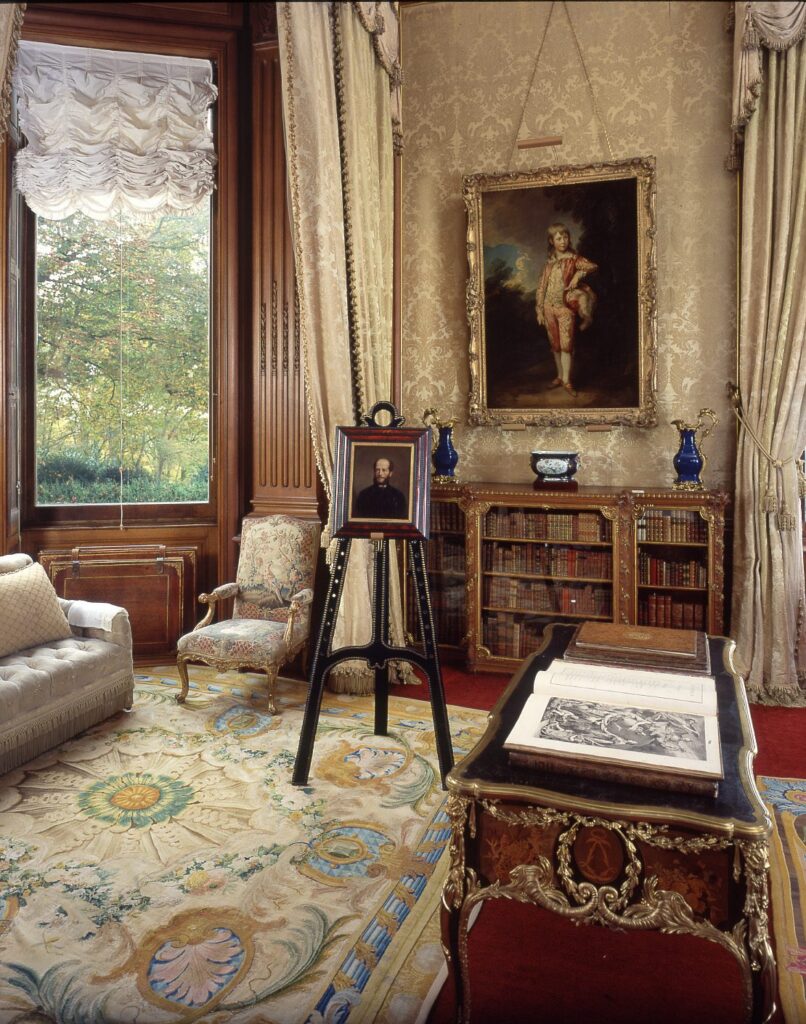
Morning Room Silks
The Morning Room’s 19th‑century wall silks, woven in Lyon in the 1880s, are undergoing conservation. Used like wallpaper but hung rather than pasted, these silks are rare survivors with matching curtains, pelmets, and furnishings.
The section recently removed had begun to shred from light exposure and had noticeably changed colour.
Because protected areas show similar fading, the discolouration is likely caused by chemical reactions in the original dyes or mordants rather than light alone. The removed silk is now being conserved and scientifically tested off‑site, returning this year. Findings will guide the careful, in‑situ conservation of the remaining silks.