To celebrate the Coronation of Their Majesties King Charles III and Queen Camilla, we are sharing some of the royal visits and stories from Waddesdon’s past.
Baron Ferdinand built Waddesdon between 1877 and 1883 to be a spectacular venue for parties and as a fitting setting for his collection. Waddesdon has a long tradition of royal visits and associations. Enjoy a selection of royal recollections, stories, anecdotes and objects from Waddesdon’s royal past.
1.
Queen Victoria:
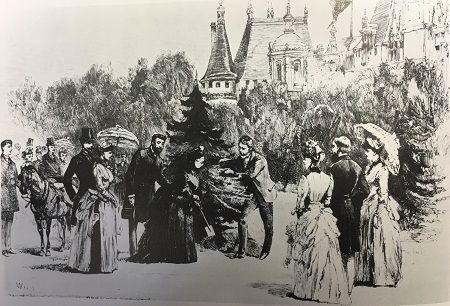
On 14 May 1890, Queen Victoria paid a much-anticipated visit to Waddesdon Manor. She travelled to Aylesbury by train and then arrived at the Manor in a grand carriage procession. The royal party was given a lavish six-course lunch, offered a tour of the house and its remarkable collections, and in the afternoon were shown the grounds before taking part in the time-honoured custom of planting a tree. Ferdinand later described driving home “thoroughly exhausted, but delighted that the visit had…passed off so satisfactorily.”
The Queen’s lunch included consommé, trout, quails, beef and chicken, asparagus, little soufflés, beignets à la viennoise — and even ortolans, tiny roasted songbirds considered a delicacy at the time. Baron Ferdinand’s weekend house parties were famous across Europe for their luxury and refinement, attracting international royalty, including the Queen’s son, the future King Edward VII. Although the house was normally run by just 24 staff, numbers could double for grand entertainments, with a French chef and Italian pastry-chef flown in from London. So impressed was Queen Victoria with the kitchen’s skill that she later sent her own chef to learn from Ferdinand’s team.
As was customary, the Queen dined in private in the Dining Room, while other guests were served nearby, accompanied by a military band. Ferdinand recalled her appetite as “proverbial,” noting that she even returned for a second helping of cold beef. In contrast, he himself preferred a simple meal of cold toast and water.
In appreciation of the visit, Queen Victoria sent Ferdinand a portrait bust by Joseph Edgar Boehm, one of her favourite sculptors, as well as a photograph of herself with her great-grandchildren. Ferdinand clearly cherished these gifts, displaying them in his private sitting room alongside the Queen’s marble bust.”
Alice de Rothschild (1847-1922) – Ferdinand’s sister and heir – entertained Queen Victoria on several occasions and after several visits to her garden at Grasse, in the south of France, in spring 1891, Alice named her villa in Grasse in the Queen’s honour (Villa Victoria).
2.
King Edward VII and Queen Alexandra:
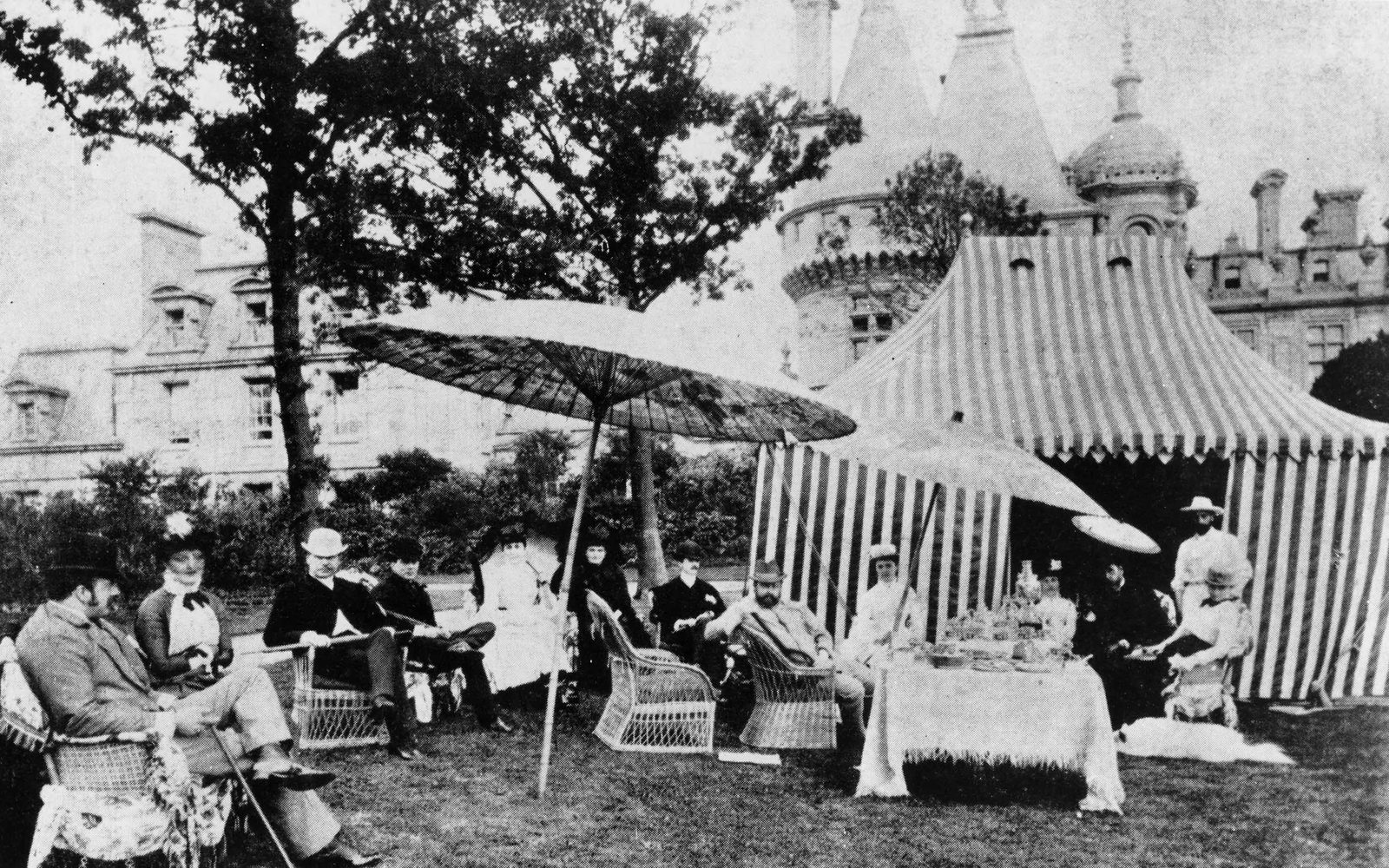
The most frequent of Baron Ferdinand’s royal visitors was Edward Prince of Wales, later Edward VII. More than ten visits to Waddesdon are recorded by the Bucks Herald, and he was also a regular visitor to Ferdinand’s London house, 143 Piccadilly. They kept in touch frequently by letter, many of which survive in Waddesdon’s archive. There are also photographs taken during these visits which show the Prince of Wales playing lawn tennis on the North Front and taking tea under a striped marquee.
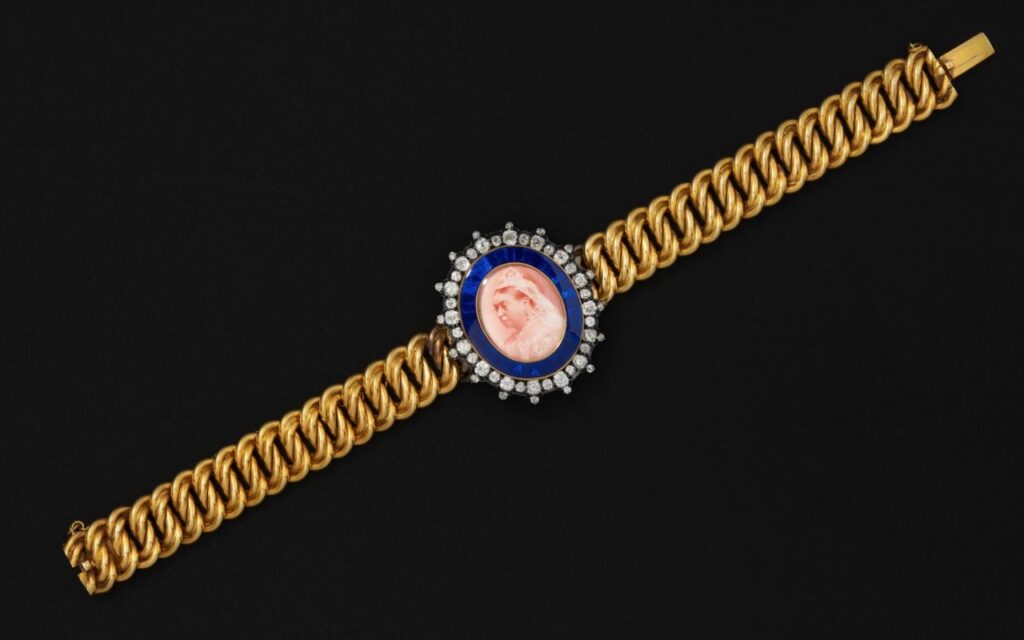
Queen Alexandra was a friend of both Ferdinand and Alice de Rothschild. Female members of the royal family often gave commemorative jewels to their female friends and staff. Gifted to Alice was a large Amethyst gem set with the interlaced double ‘A’ cipher of the Queen and above the pendant, attached to the chain, is an enamelled crown. Amethyst symbolises devotion and the stone is surrounded by forget-me-nots in diamonds.
3.
King George V and Queen Mary:
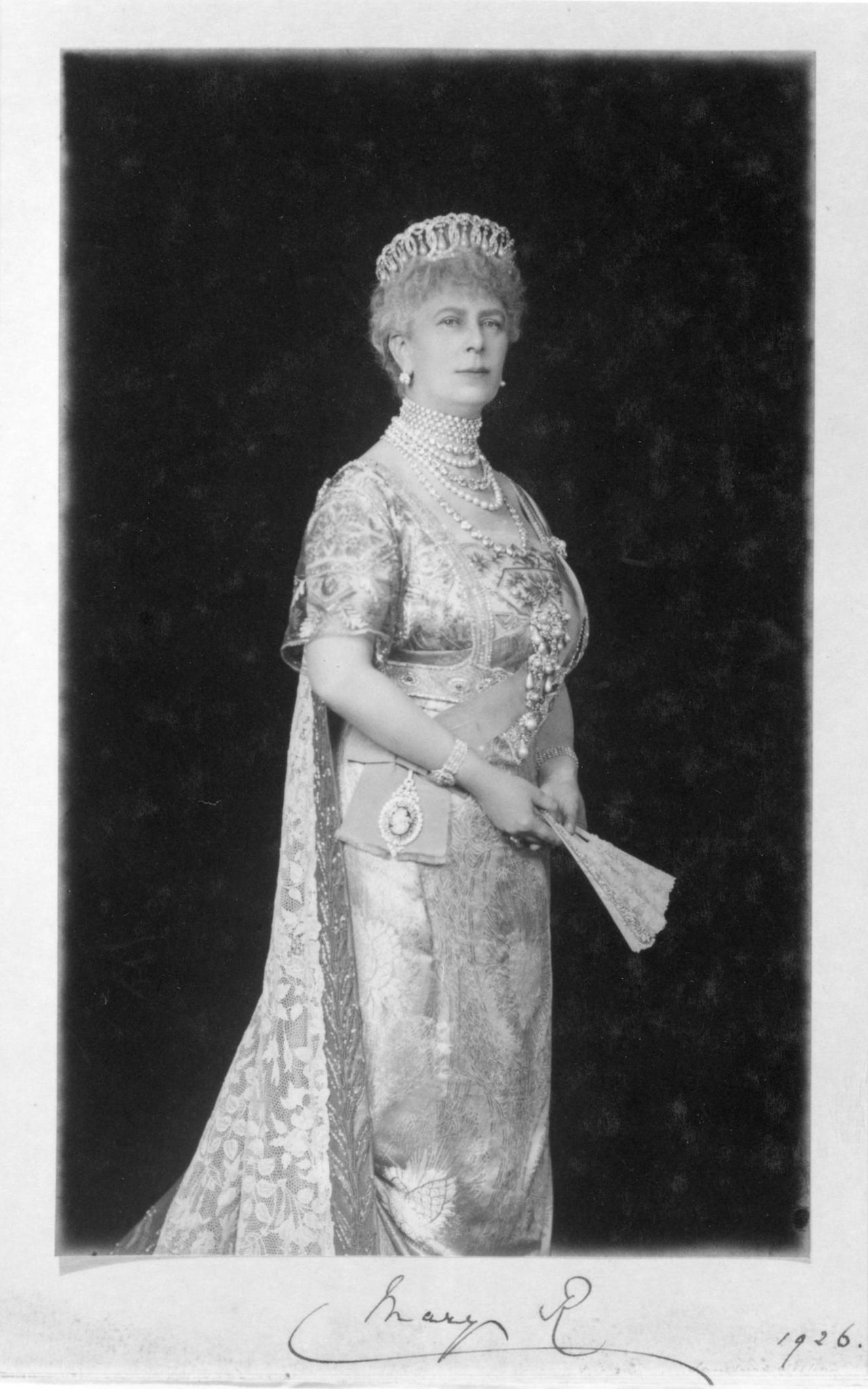
Alice de Rothschild left Waddesdon to her great-nephew, James de Rothschild (1878-1957) and his wife Dorothy (1895-1988) in 1922. Four years later, George V and Queen Mary followed in their forebears’ footsteps and visited Waddesdon. Initially, James and Dorothy were expecting only Mary for tea, but received a late telephone call from Buckingham Palace asking if the King could join, and whether they could provide lunch. A burst of activity ensued as menus were prepared, additional guests invited, and royal protocols revised. Dorothy recounted how she ‘became uneasily aware of my ignorance of the conventions which might rule the reception of a reigning monarch in one’s own home’.
On the day of the visit (18 July 1926), during a tour of the gardens, the royal party paused on the Parterre to admire the fountain. Unfortunately, the expected jets of water failed to appear and instead erupted with strange gurgles, which greatly amused the Queen.
After the occasion, which despite the failure of the fountain was considered a great success, Queen Mary wrote to Dorothy to express her thanks: ‘The King and I are sending you both our photographs as a souvenir of our delightful day at Waddesdon which was so very enjoyable – We are grateful for your kindness in showing us all your treasures’.
4.
King George VI and Queen Elizabeth:
Letters in Waddesdon’s archive record correspondence between Dorothy de Rothschild and Queen Elizabeth, the Queen Mother, consort of George VI, over several decades. Many refer to the exchange of gifts; Dorothy’s gifts to Elizabeth included bottles of wine from Château Lafite Rothschild and a pair of gloves from Paris. The archive also contains Dorothy’s invitation to the Queen Mother’s 80th Birthday celebration and thanksgiving service at St Paul’s Cathedral in July 1980. The Queen Mother last visited Waddesdon in 1994, shortly after the Centenary restoration.
5.
Queen Elizabeth II and the Duke of Edinburgh :
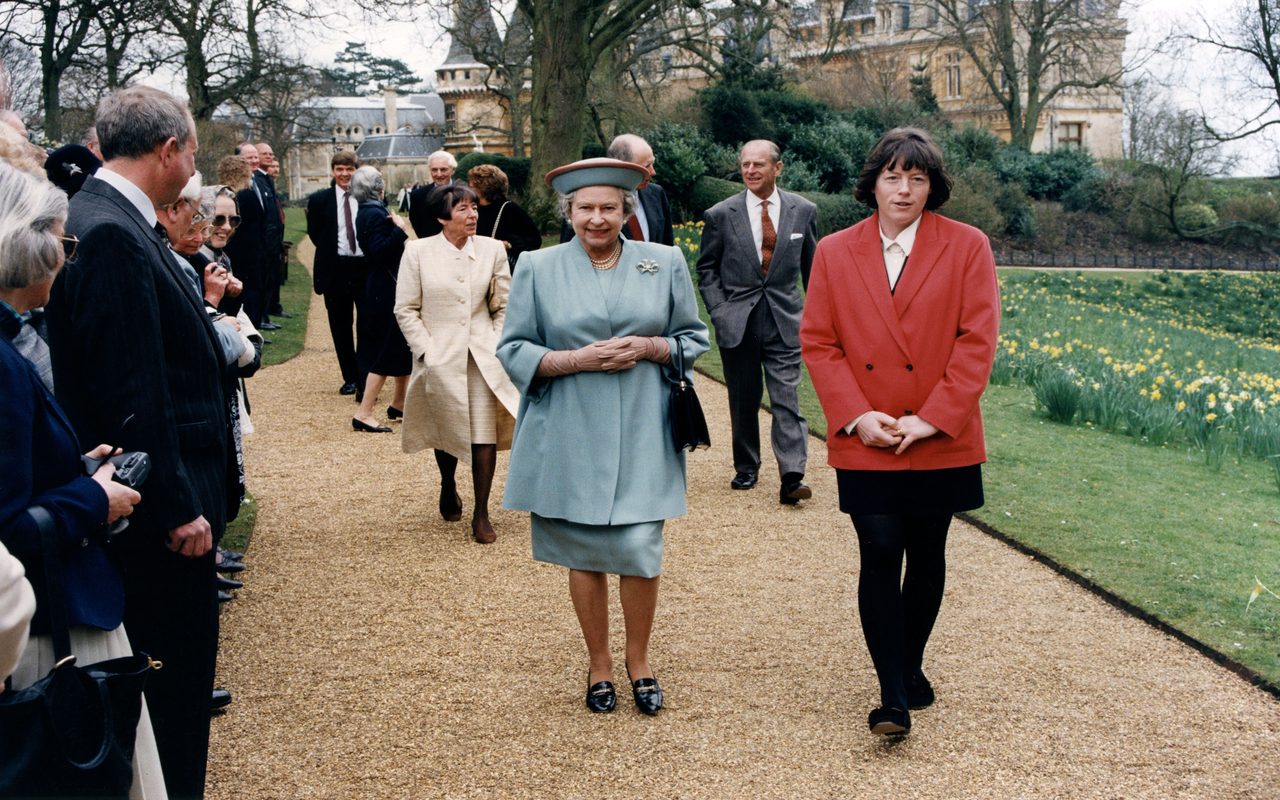
Queen Elizabeth II and the Duke of Edinburgh visited Waddesdon on 31 March 1995, following the completion of the Centenary restoration project. From 1990 to 1994, Waddesdon underwent an extensive interior and exterior refurbishment, which updated the services and created exhibition and entertainment spaces on the first and second floors, and the Wine Cellars. The royal visit was a culmination of this accomplishment.
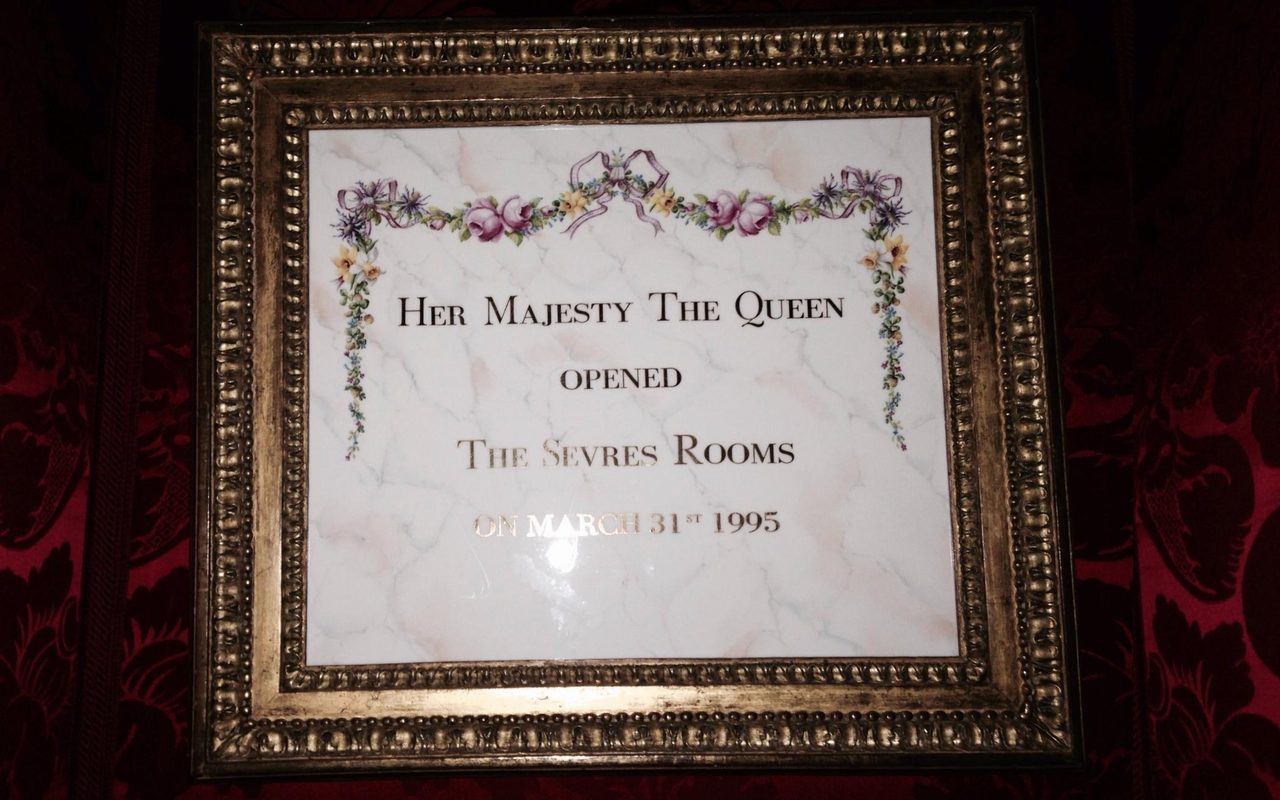
During her visit, Queen Elizabeth officially opened Waddesdon’s new Sèvres Rooms, which were created during the Centenary restoration to display three magnificent dinner and dessert services made by the manufactory (the Starhemberg (1766), Razumovsky (1767) and Marie-Antoinette (1781) services). Waddesdon is one of few places in the country where you can see such extensive services on display. Appropriately enough, the commemorative plaque recording the occasion is made from Sèvres porcelain.
6.
Charles III and Queen Camilla:
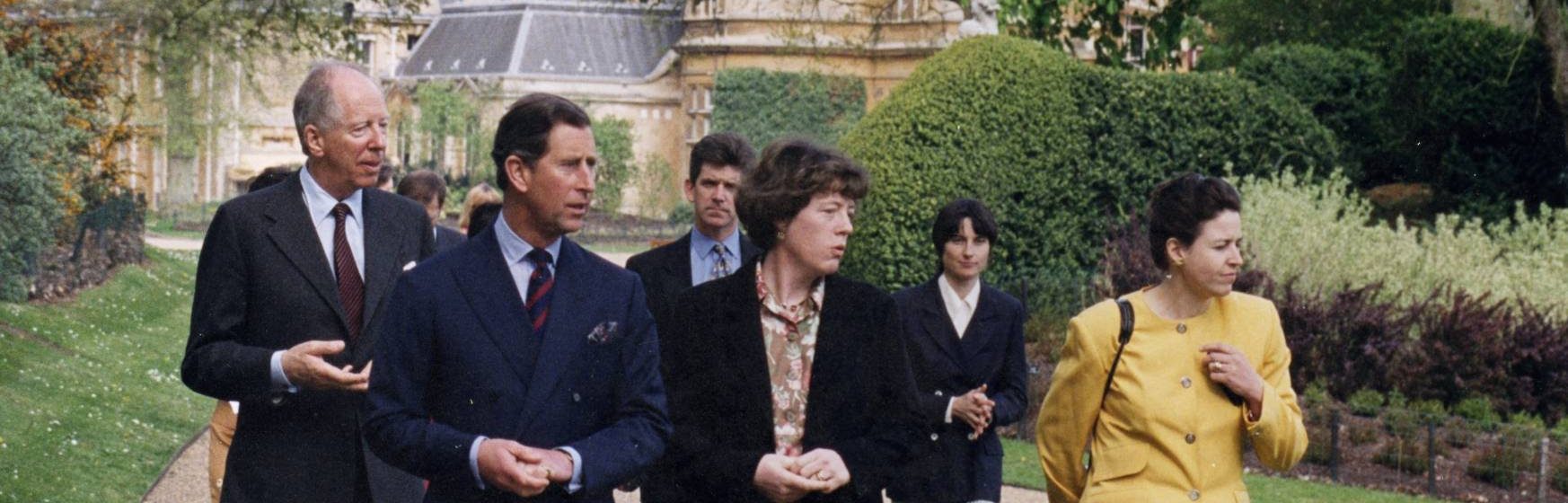
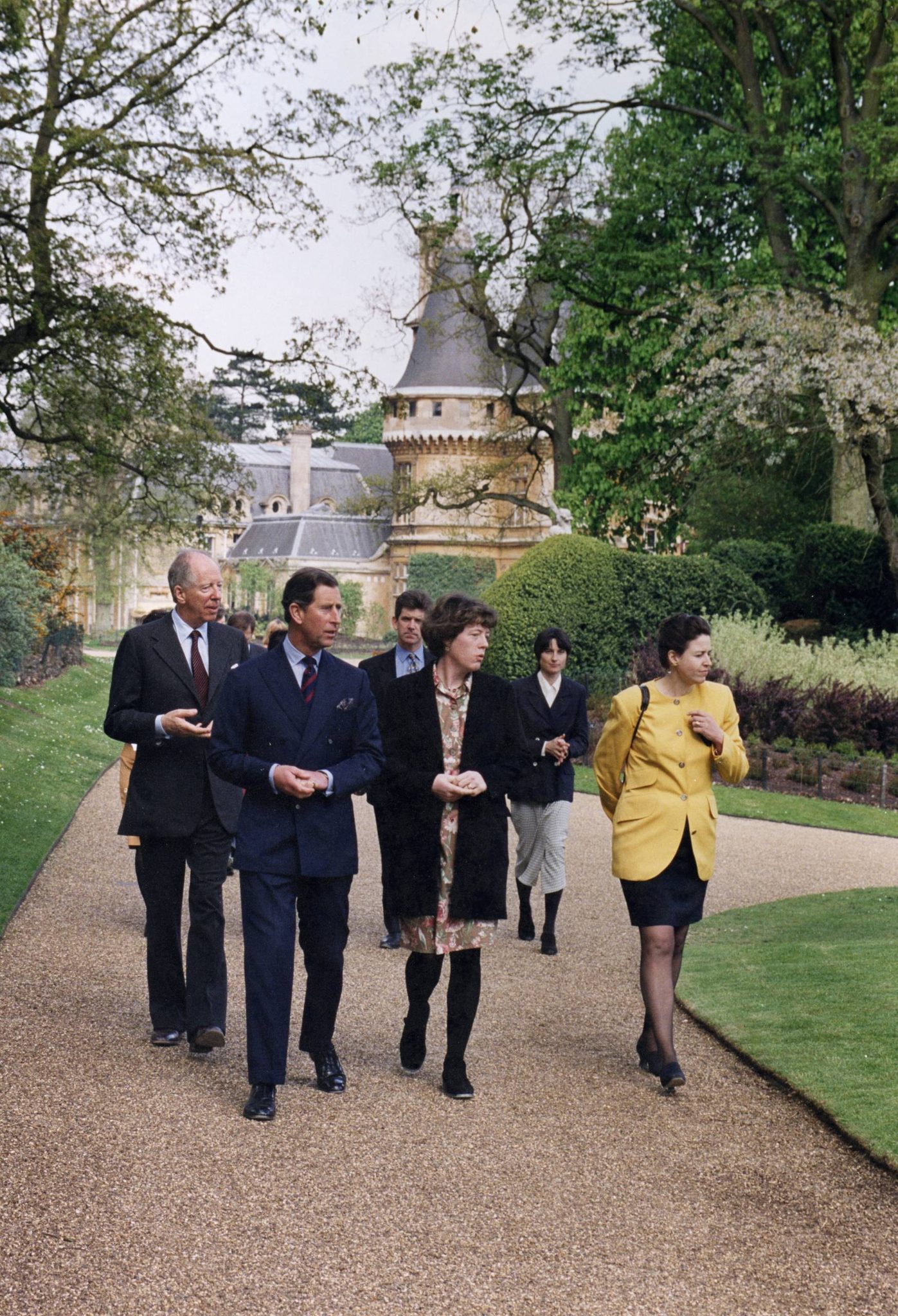
The King and Queen have visited Waddesdon on a number of occasions and attended many charitable events. The King (then Prince of Wales), officially opened Waddesdon’s Dairy, following an extensive restoration programme and its conversion into an events space. The King’s visit on 13 May 1996, took place almost exactly 106 years after the King’s great-great-great grandmother (Queen Victoria) was entertained at Waddesdon.
In 2008, in keeping with a long tradition of tree planting at Waddesdon, the King used this commemorative spade to plant a maple. Queen Victoria carried out a similar engagement in 1890 and Ferdinand employed an artist to record the event while concealed in a nearby bush. Many trees planted on royal occasions can now be seen as mature specimens, close to the Aviary – all except Queen Victoria’s Spanish Fir, which was lost during the 1987 storm.